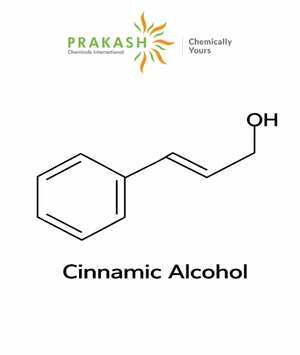












Cinnamic Alcohol
- HS Code: 2906.29.90
- CAS NO. : 104‑54‑1

- General Description
- Technical Specification
- Applications
- Compliance and Certifications
- Packaging Details:
- Storage and Handling
General Description
Cinnamic Alcohol (also called Cinnamyl Alcohol) is a premium aromatic alcohol valued for its sweet, balsamic, floral, and spicy scent profile, making it a vital ingredient in the fragrance, flavor, and personal care industries. Occurring naturally in cinnamon leaves, balsam resins, and other botanicals, this versatile compound also functions as a key solvent and chemical intermediate in organic synthesis. Its unique aroma and stability enhance perfumes, cosmetic formulations, and flavored products, while industrial producers rely on its consistent quality and performance for specialty applications.
Technical Specification
• Appearance : White crystals or pale yellow solid/liquid depending on temperature
• Purity (GC) ≥ 98% (typical fragrance grade)
• Melting Point : ~30–33 °C
• Boiling Point : ~250 °C
• Density (25 °C) : ~1.04–1.044 g/mL
• Refractive Index (20 °C) : ~1.58 – 1.59 (typical)
• Solubility : Slightly soluble in water, Miscible with alcohols and organic solvents
Applications
Cinnamic Alcohol is widely used due to its appealing scent and versatile chemistry:
• Fragrance & perfumery : Key ingredient in perfumes, soaps, toiletries, and scented products to add floral, spicy, balsamic nuances.
• Flavoring : Used as a flavor component in foods (e.g., bakery and confectionery) within regulatory limits.
• Cosmetics & personal care : Enhances aroma in shampoos, lotions, creams, deodorants, and other grooming products.
• Chemical intermediate : Used in synthesis of cinnamyl esters and other aroma compounds.
• Household products : Utilized in scented detergents, cleaners, and air fresheners
Compliance and Certifications
• REACH
• Food Grade
• KOSHER
• HALAL
• GMP
Packaging Details:
• 200 kg MS Drums
Storage and Handling
• Store in a cool, dry, and well‑ventilated area away from heat, open flames, and ignition sources.
• Keep containers tightly closed to prevent contamination and moisture ingress.
• Avoid prolonged exposure to light and strong oxidizing agents.