







Benzyl Alcohol Used For: A Complete Industry Guide

Benzyl Alcohol Used For: A Complete Industry Guide

Benzyl Alcohol Used For: A Complete Industry Guide to Applications, Grades, and Sourcing.

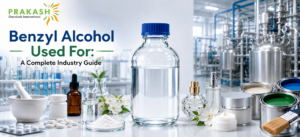
Benzyl alcohol is one of those quietly essential chemicals that shows up in more industries than most people realise. Walk through a pharmacy, a cosmetics aisle, a paint shop, or a printing press, and there is a fair chance that benzyl alcohol played a role somewhere in the formulation. For procurement teams, formulators, and R&D chemists, understanding exactly what benzyl alcohol is used for and which grade fits which application is the first step toward sourcing it correctly.

This guide breaks down the chemistry, the major applications, the different purity standards you will encounter (including USP, and grades referenced by suppliers like Sigma-Aldrich and Merck), and practical guidance on finding a reliable benzyl alcohol supplier near me or for bulk industrial procurement.
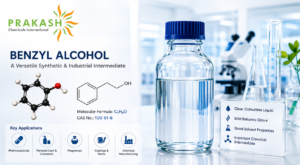
what is benzyl alcohol

What Is Benzyl Alcohol?

Benzyl alcohol (CAS No. 100-51-6, HS Code 29062100) is an aromatic primary alcohol with the molecular formula C₇H₈O. It is a clear, colourless liquid with a mild, pleasant balsamic odour, low volatility, and comparatively low toxicity properties that make it genuinely versatile across chemical, pharmaceutical, and personal care manufacturing. It is partially miscible in water and completely miscible with most common organic solvents, which is part of why it functions so well as both a solvent and a chemical intermediate.

Because of this versatility, the question “what is benzyl alcohol used for” comes up constantly among buyers who are new to specialty and fine chemicals. The honest answer is: a lot, and across very different industries.

Benzyl Alcohol Used For: Core Industrial Applications

  1. Pharmaceuticals


In the pharmaceutical sector, benzyl alcohol is primarily used as a preservative and bacteriostatic agent in injectable drug formulations, where it prevents microbial contamination in multi-dose vials. It also functions as a local anaesthetic in certain topical formulations and is an active ingredient in some prescription treatments for head lice, applied as a diluted solution. Pharmaceutical-grade material for these applications is almost always required to meet USP (United States Pharmacopeia) monograph specifications, since injectable and topical drug products are held to strict pharmacopoeial purity and impurity-profile limits.
Pharmaceuticals

  1. Personal Care and Cosmetics


This is arguably where benzyl alcohol is used for the widest range of everyday products. It appears in creams, lotions, shampoos, deodorants, and fragrances as a preservative, solvent, viscosity-reducing agent, and fragrance fixative. Cosmetic-grade benzyl alcohol needs to be IFRA-compliant and suitable for INCI ingredient declarations, since it is applied directly to skin in leave-on and rinse-off products.
Personal Care & Cosmetics

  1. Flavours and Fragrances


Benzyl alcohol is a naturally occurring aroma chemical found in essential oils such as jasmine, hyacinth, and ylang-ylang. In the flavour and fragrance industry it is used as a fixative and diluent for perfume compounds, slowing the evaporation rate of more volatile fragrance notes. It is also used to manufacture downstream esters such as benzyl acetate, which carry sweet, fruity notes used in flavourings.
Benzyl Alcohol Used For A Complete Industry Guide

  1. Coatings, Inks, and Paints


Industrial and technical-grade benzyl alcohol is widely used as a solvent in epoxy hardeners and epoxy curing systems, marine paints, ballpoint pen inks, and lacquers. It is also used as a paint stripper, including in aviation applications, as an environmentally preferable substitute for methylene chloride.
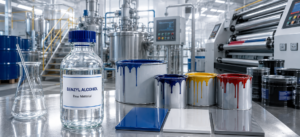
Coatings, Inks & Paints

  1. Chemical Synthesis


In chemical manufacturing, benzyl alcohol is a common intermediate used to introduce phenyl and benzyl                     groups into other molecules. It is used in the production of benzyl chloroformate, in ester synthesis for                           polypeptide intermediates, and as a precursor for pesticide and agrochemical derivatives, as well as active                     pharmaceutical ingredient (API) building blocks

  1. Photography


A more niche but well-documented use: benzyl alcohol is used in developing baths for colour films and colour transparencies, and is included in stop baths for producing lithographic plates.

Understanding Grades: USP, Sigma-Aldrich, Merck, and Technical Grade

Not all benzyl alcohol is interchangeable, and this is where a lot of first-time buyers get tripped up. When people search for what benzyl alcohol is used for, they are often really asking which grade they need.

  • USP Grade: Meets United States Pharmacopeia purity and impurity criteria, required for pharmaceutical, injectable, and certain topical drug applications.


  • FCC (Food Chemicals Codex) Grade: Meets food-grade purity standards for use as a flavouring agent and fragrance carrier.


  • Cosmetic/Personal Care Grade: IFRA and EU Cosmetics Regulation compliant, suitable for INCI-declared formulations.


  • Industrial/Technical Grade (typically 99.5% min purity): Used for coatings, epoxy systems, resins, and general chemical synthesis where extreme pharmacopoeial purity is not required.


When researching specifications, chemists frequently cross-reference reagent catalogues from Sigma-Aldrich and Merck, both of which publish detailed certificates of analysis, safety data sheets, and purity gradings for benzyl alcohol used in laboratory and analytical settings. These reference points from Sigma-Aldrich and Merck are useful for benchmarking purity and impurity thresholds, even when the actual bulk procurement is sourced from a dedicated industrial manufacturer rather than a laboratory reagent supplier. It is worth noting that laboratory-reagent-grade material from Sigma-Aldrich or Merck is priced and packaged for small-scale research use, while industrial buyers procuring drums or bulk tanker quantities typically work directly with manufacturers who can supply USP, FCC, cosmetic, or technical grades at commercial volumes with consistent batch-to-batch quality.

Finding a Reliable Supplier Near Me

For many buyers, the practical next step after understanding the applications is a search for “benzyl alcohol supplier near me” or “benzyl alcohol manufacturer near me.” While a nearby

You Can Also follow us on linkidin:

Call Or Whatsapp:  +91-63530 76797

Sodium Lauryl Ether Sulphate Uses

Sodium Lauryl Ether Sulphate Uses: A Complete Guide by PCIPL

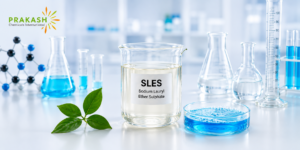
Sodium Lauryl Ether Sulphate, commonly known as SLES, is one of the most widely used anionic surfactants in the personal care, home care, and industrial cleaning industries. If you are searching for a best and top quality Sodium Lauryl Ether Sulphate supplier, Prakash Chemicals International Private Limited (PCIPL) is a trusted name that exports this surfactant to formulators across India and international markets. This article covers the Sodium Lauryl Ether Sulphate uses, chemical formula, key benefits, and how to find a reliable supplier near me for your bulk or industrial requirements.

Sodium Lauryl Ether Sulphate Uses


What is Sodium Lauryl Ether Sulphate?

Sodium Lauryl Ether Sulphate is an anionic surfactant derived from lauryl alcohol and ethylene oxide, produced through a sulfonation process. It is widely recognized for its excellent foaming, detergency, and emulsifying properties, making it one of the most preferred ingredients across detergent and personal care manufacturing. SLES is commonly supplied as a viscous liquid or paste and is compatible with a wide range of formulation systems, which is why understanding the various Sodium Lauryl Ether Sulphate uses is important for formulators, procurement teams, and manufacturers alike.

Chemical Formula of Sodium Lauryl Ether Sulphate

The chemical formula of Sodium Lauryl Ether Sulphate is:

C₁₂H₂₅(OCH₂CH₂)ₙOSO₃Na

This formula represents the ethoxylated sulphate structure of the compound, where “n” denotes the number of ethylene oxide units. This ethoxylation is what gives SLES its mildness compared to other anionic surfactants, while still retaining strong cleansing and foaming characteristics. PCIPL supplies SLES in different active matter grades 28% and 70% depending on the application and customer requirement.

Reference identifiers:

  • HS Code: 34023900
  • CAS No.: 68585-34-2

Sodium Lauryl Ether Sulphate Uses

Understanding the Sodium Lauryl Ether Sulphate uses across industries helps buyers select the right grade for their formulation. Below are the primary application areas where SLES is used extensively.

SLES


  1. Detergents and Laundry Formulations

One of the most common Sodium Lauryl Ether Sulphate uses is as a primary surfactant in detergent and laundry powder or liquid formulations. It delivers effective soil removal along with stable, rich foaming, which is a key performance indicator that customers look for in laundry products.

  1. Personal Care Products

SLES is a core ingredient in shampoos, body washes, and liquid soaps. Its cleansing action combined with generous lather generation makes it a favourite among personal care formulators. When looking for the best SLES for shampoo or body wash formulations, manufacturers typically prefer the 70% active matter grade from a reliable supplier like PCIPL.

  1. Dishwashing Liquids

Another important application among Sodium Lauryl Ether Sulphate uses is in dishwashing liquid formulations. SLES effectively removes grease and food residues from utensils while maintaining stable foam throughout the washing process.

  1. Household and Institutional Cleaners

SLES is widely used in multi-purpose household cleaners and institutional surface care formulations, where efficient detergency and mild skin contact are both essential.

  1. Industrial Cleaning Formulations

In degreasers and specialty industrial cleaners, SLES provides strong surfactant action, making it suitable for tougher cleaning applications where a higher concentration or the 70% active matter grade is often preferred.

Key Benefits of Sodium Lauryl Ether Sulphate

There are several benefits that make SLES one of the most sought-after surfactants in the chemical industry:

  • Excellent foaming and detergency performance SLES produces rich, stable foam that consumers associate with effective cleaning.
  • Good compatibility with other surfactants It blends well with co-surfactants such as Cocamidopropyl Betaine and Sodium Lauryl Sulphate, allowing formulators flexibility in product design.
  • Stable across a wide pH range This makes it suitable for a variety of formulation types, from acidic to alkaline cleaning products.
  • Mildness on skin Compared to non-ethoxylated sulphates, SLES offers a relatively gentler interaction with skin, which is why it is preferred in personal care.
  • Cost-effective and easy to handle Its stability and ease of handling make it a preferred choice for high-volume cleaning and hygiene product manufacturing.

These benefits collectively explain why SLES continues to be a top choice among surfactants for both personal care and home care manufacturers.

Compliance and Certifications

PCIPL’s Sodium Lauryl Ether Sulphate is manufactured in compliance with international standards, including:

  • REACH compliance
  • RSPO certification

This ensures that customers sourcing from PCIPL receive a product that meets global regulatory and sustainability benchmarks.

Packaging Options

To suit varying order volumes, PCIPL offers Sodium Lauryl Ether Sulphate in multiple packaging formats:

  • 170 kg HDPE drums
  • 235 kg HDPE drums
  • 1000 kg IBC (Intermediate Bulk Containers)
  • Flexi bags for bulk shipment

Storage and Handling Guidelines

Proper storage ensures the product retains its quality and performance. It is recommended to:

  • Store SLES in a cool, dry, and well-ventilated area
  • Protect containers from direct sunlight and extreme temperatures
  • Keep containers tightly closed when not in use

Why Choose Prakash Chemicals International Private Limited (PCIPL)?

When searching for a Sodium Lauryl Ether Sulphate supplier near me, or when evaluating suppliers for bulk procurement, Prakash Chemicals International Private Limited stands out as a knowledge-driven chemical company with over 75 years of legacy through the Prakash Group. The product is also known as Sodium Laureth Sulfate (SLES). PCIPL caters to industries across personal care, home care, and industrial cleaning segments, globally.

As a top and best rated supplier and exporter of Sodium Lauryl Ether Sulphate, PCIPL ensures:

  • Consistent product quality across multiple active matter grades
  • Reliable supply chain and export capability
  • Technical support for formulation guidance
  • Compliance with international quality and sustainability certifications

Whether you are formulating shampoos, dishwashing liquids, laundry detergents, or industrial cleaners, PCIPL’s Sodium Lauryl Ether Sulphate offers the performance, mildness, and cost-effectiveness that formulators need.

Frequently Asked Questions

What is the chemical formula of Sodium Lauryl Ether Sulphate? The formula is C₁₂H₂₅(OCH₂CH₂)ₙOSO₃Na.

What are the main Sodium Lauryl Ether Sulphate uses? SLES is primarily used in detergents, personal care products such as shampoos and body washes, dishwashing liquids, household cleaners, and industrial degreasing formulations.

What is the HS Code for Sodium Lauryl Ether Sulphate?

The HS Code is 34023900.

What grades of SLES does PCIPL offer?

PCIPL offers SLES in 28% and 70% active matter concentrations, depending on application requirements.

How can I find the best SLES supplier near me?

Prakash Chemicals International Private Limited exports and supplies Sodium Lauryl Ether Sulphate across the Middle East, Africa, Europe, Asia-Pacific, and the Americas, making it accessible to formulators worldwide.

Conclusion

Sodium Lauryl Ether Sulphate remains one of the most versatile and widely applied surfactants across personal care, home care, and industrial cleaning industries. From its distinct chemical formula to its wide-ranging benefits and applications, SLES continues to be the go-to ingredient for formulators seeking dependable foaming and cleansing performance. For businesses looking for the best, top-quality Sodium Lauryl Ether Sulphate supplier, Prakash Chemicals International Private Limited (PCIPL) offers consistent product quality, global export experience, and technical expertise to support your formulation needs.

For bulk inquiries, technical data sheets, or a quote, connect with the PCIPL team at info@prakashchemicals.com or call +91-63530 76797